Molvantirex
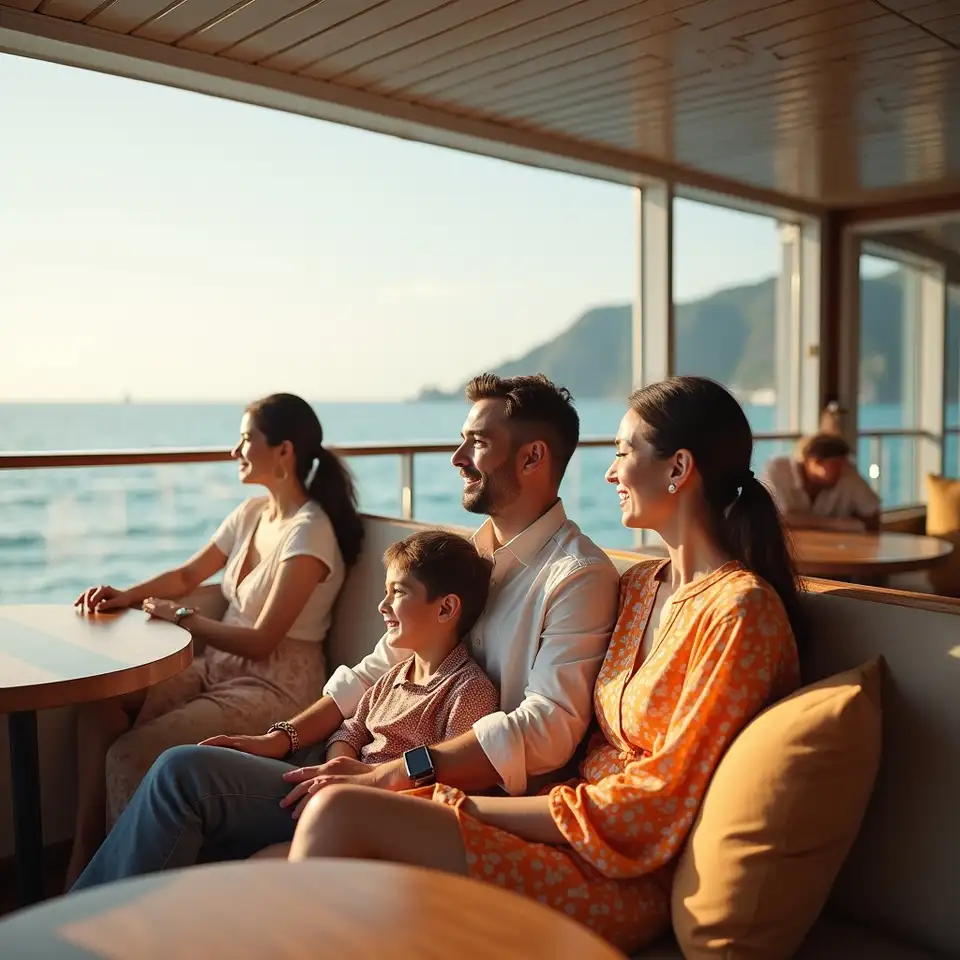
family group enjoying cruise ship deck

Family Cruising

Why a cruise holiday works particularly well for families travelling together from Malaysia.

Family cruise travel solves one of the most persistent challenges of group holidays: finding a format that genuinely works for everyone at the same time. First, the ship provides a contained, safe environment where children can move between age-appropriate activity spaces while adults enjoy their own pace independently. Next, the all-inclusive structure of most cruise fares removes the daily negotiation over meals and entertainment costs that can create friction on land-based family trips. Finally, the variety of destinations visited on a single itinerary means that different members of the family — different ages, different interests, different energy levels — all find something that genuinely appeals to them. The result is a holiday format that holds together as a shared experience without requiring everyone to do the same thing at the same time.

Say Hello


Cruising With Family and Groups

A clear, step-by-step guide to planning a cruise that works for every member of your travelling party.

Group travel has a reputation for being complicated, and sometimes that reputation is earned. Cruise travel, however, is genuinely well-suited to groups of mixed ages, interests, and energy levels. First, you identify the composition of your group — families with young children, multigenerational parties, or groups of friends travelling together each have different priorities and different requirements. Next, you match those priorities to the right itinerary, ship size, and cabin configuration. Finally, you plan the shared elements of the trip — embarkation logistics, dining arrangements, and a small number of agreed group activities — while leaving room for individual members to pursue their own interests on board and ashore. This structure is what makes cruise travel work for groups in a way that few other holiday formats can replicate.

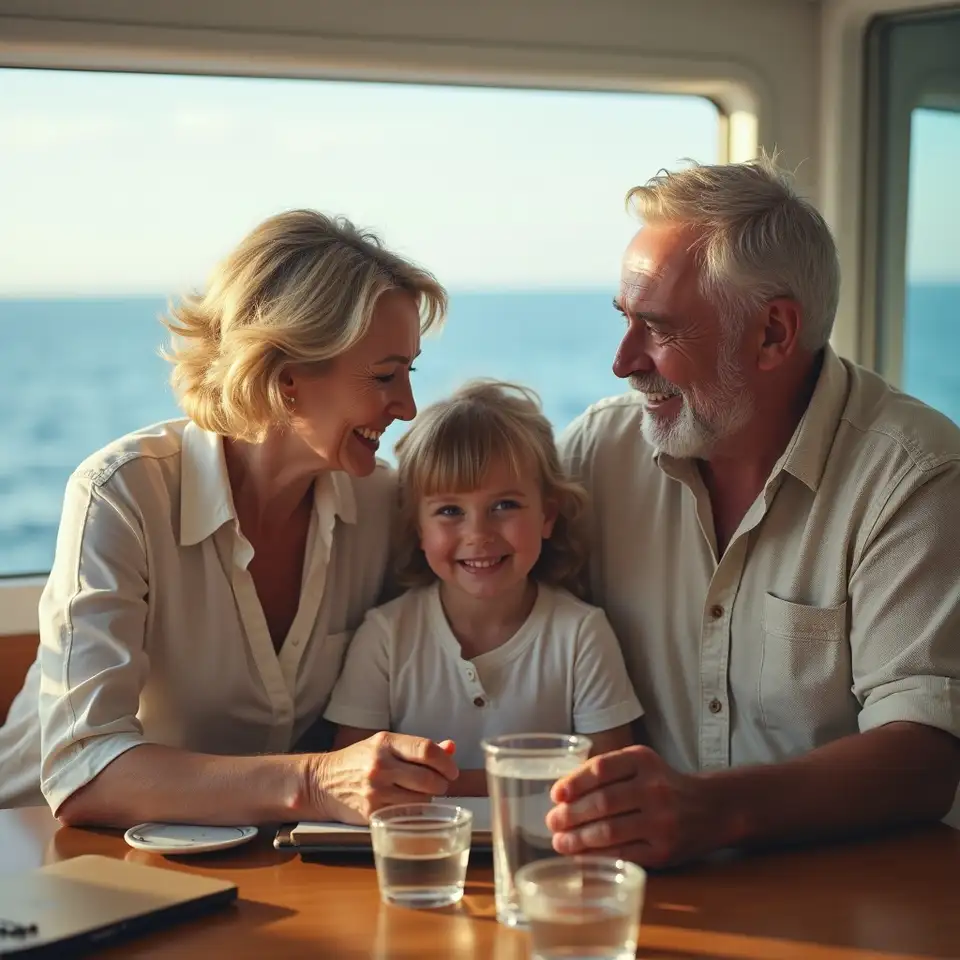
multigenerational family smiling on cruise ship deck

Group Travel Tips

family cruise port excursion

Cabin Configuration

Cabin selection for a family or group requires more planning than booking individual rooms independently. First, identify how many people are in your group and how they prefer to be divided — couples, families, or mixed arrangements. Next, check whether connecting cabins are available on your chosen ship, as these allow separate sleeping spaces with shared internal access. Finally, note that cabin categories differ significantly in size and layout, and what works for two adults may not be comfortable for a family of four sharing the same room.

Dining Together

Coordinating meals for a group on a cruise requires a small amount of advance planning but pays off significantly in practice. First, request a shared table in the main dining room when you book — this ensures the group eats together without needing to arrive simultaneously at the buffet and hope for adjacent space. Next, agree in advance on which evenings the group will dine together formally and which evenings allow for individual choices. Finally, book any shared specialty dining reservations on embarkation day before availability narrows.

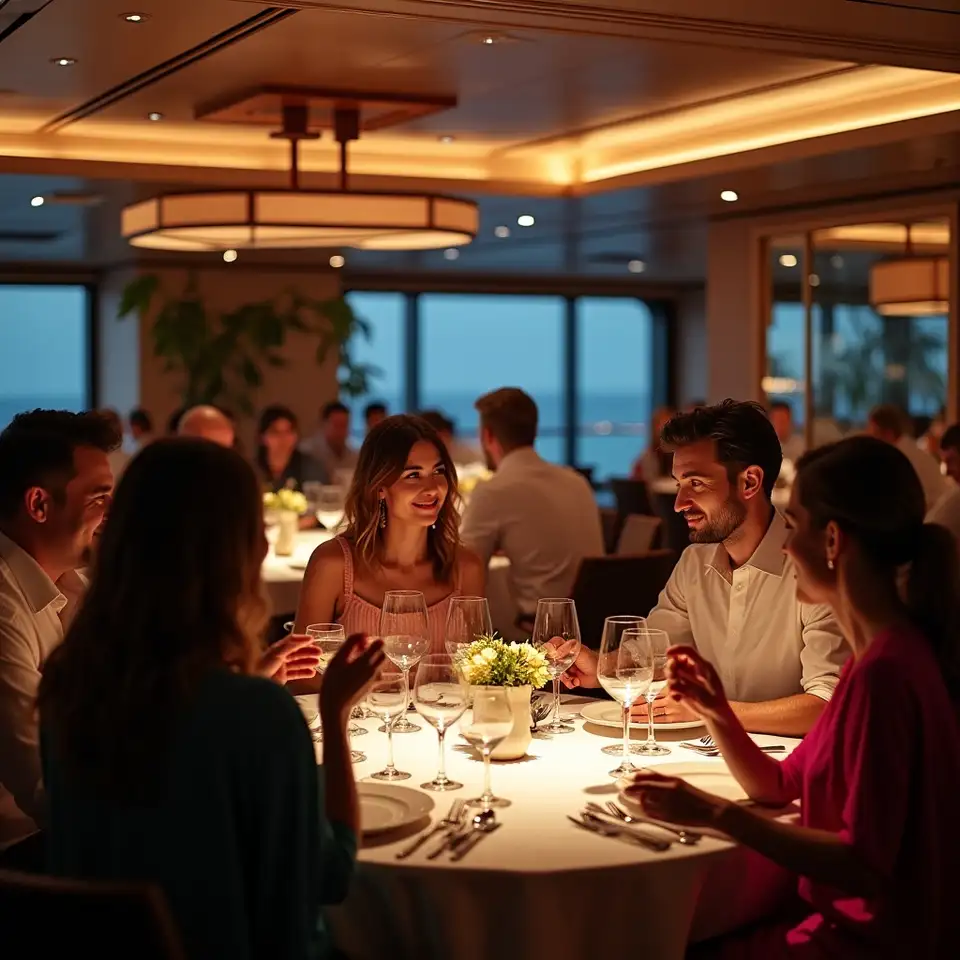
group dining cruise restaurant

Shore Day Coordination

Not every member of a group will want to do the same thing at every port — and that is entirely reasonable. First, identify which shore experiences are genuinely shared priorities and book those as a group activity. Next, agree on a meeting point and a clear all-aboard time so that individuals who explore independently can do so without anxiety about logistics. Finally, build in a buffer before the ship's departure — a group that arrives back at the pier with time to spare avoids the stress that can otherwise overshadow an otherwise excellent shore day.

Managing Group Costs

Group travel introduces a layer of financial coordination that is worth addressing early rather than leaving to chance. First, agree before the voyage on how shared costs — group excursions, shared specialty dining, group photographs — will be divided. Next, understand that each traveller's onboard account is individual, which means personal spending on beverages, spa treatments, and extras is managed separately. Finally, consider whether a shared communication channel for the group, such as a messaging thread, helps coordinate plans efficiently throughout the voyage without requiring constant physical coordination.

Start Here

Children Onboard

Modern cruise ships invest significantly in facilities and programming designed specifically for younger travellers, and the quality of these offerings varies more than most parents anticipate before their first family cruise. First, understand that children's clubs on most major cruise lines are organised by age group, typically covering toddlers through to teenagers, with programming calibrated to each stage. This means a twelve-year-old and a seven-year-old in the same family will have separate, age-appropriate spaces and activities rather than being grouped together. Next, visit the children's club facilities on embarkation day and allow your children to explore them before the ship departs — familiarity with the space makes the first drop-off considerably easier. After that, understand the supervision model: most clubs operate on a signed-in, signed-out basis with clear safety procedures. Finally, note that children's club hours vary by ship and itinerary, and some clubs close or reduce hours on port days when families are typically ashore together. Reviewing the schedule in the daily programme each evening helps you plan the following day with your children's preferences and energy levels in mind. The practical result of well-designed children's programming is that parents can enjoy portions of the voyage at their own pace — a meal without managing small children, an afternoon in the spa, or simply a quiet hour on a deck chair — while their children are genuinely engaged in activities they enjoy. This balance is one of the most consistent reasons families return to cruise travel after their first voyage together.
wheelchair traveler boarding accessible cruise ship
Accessibility

Cruising for All Travellers

Cruise ships have made meaningful progress in accommodating travellers with mobility requirements, dietary needs, and other accessibility considerations. First, identify your specific requirements clearly when booking — accessible cabin categories, bathroom configurations, and boarding assistance are all easier to arrange in advance than on embarkation day.
Next, communicate dietary requirements to the dining team on the first day aboard rather than at each individual meal. Finally, review the accessibility features of each port on your itinerary, as some destinations are more navigable than others for travellers with limited mobility — knowing this in advance allows you to plan each shore day realistically.

Planning a Multigenerational Cruise From Malaysia With Confidence

The multigenerational cruise works because the ship accommodates everyone simultaneously rather than sequentially.

First, acknowledge that a multigenerational group — grandparents, parents, and children travelling together — has genuinely different requirements operating in parallel. Older travellers may prioritise quieter spaces, enrichment programmes, and comfortable pacing between ports. Parents with young children need reliable childcare options and family-friendly dining. Teenagers want independence, activity, and connection with peers their own age. The cruise format accommodates all three simultaneously in a way that a single villa or resort hotel rarely can.

Next, use the ship's structure to your advantage. Book cabins in proximity to one another so the group can connect easily between activities without significant walking distance. Agree on one or two daily touchpoints — breakfast together, a shared dinner every other evening — and allow the rest of the day to unfold according to individual preferences. Finally, brief every member of the group on the practical logistics before departure: embarkation timing, cabin numbers, meeting points, and the all-aboard procedure at each port.

Shared cabins in proximity simplify daily group coordination significantly

Age-appropriate children's clubs allow parents genuine rest time onboard

Accessible facilities and pacing options suit older travellers comfortably

Agreed daily touchpoints keep the group connected without over-scheduling

Pre-agreed port meeting points prevent coordination stress ashore

three generations of family enjoying cruise ship deck together with ocean views in background
Every Generation Finds Their Place Onboard

The ship serves every traveller simultaneously.

Four Practical Considerations for Group and Family Cruise Bookings

Bold claim first: the difference between a group cruise that brings people together and one that creates friction lies almost entirely in decisions made before the voyage begins. First, cabin selection and proximity planning determines how easily the group connects throughout the trip. Next, dining coordination — agreeing on shared meals in advance — removes the daily negotiation that can exhaust even willing groups. After that, shore day planning that balances shared experiences with individual freedom keeps every member of the party genuinely satisfied at each port. Finally, a shared understanding of the financial structure — what is included, what is individual, and how group costs are divided — prevents the misunderstandings that can surface unexpectedly at the end of the voyage.

Cabin Selection and Group Proximity Planning

Choosing cabins in close proximity makes daily coordination natural rather than effortful. First, request adjacent or connecting cabins when booking and confirm availability directly. Next, check that the cabin category suits the number and ages of occupants — a cabin that works for two adults may be cramped for a family of four. Finally, consider deck placement relative to the facilities your group will use most frequently throughout the voyage.

Plan proximity

Dining Coordination Across a Mixed-Age Group

Shared meals are among the most memorable parts of a group cruise, but they require a small amount of advance organisation. First, request a dedicated group table in the main dining room at the time of booking. Next, agree on which evenings are designated group dinners and which allow individual choice. Finally, book any special shared dining experiences — a birthday dinner, a celebration meal — on embarkation day when restaurant availability is at its highest.

Coordinate early

Shore Day Planning for Groups With Different Interests

Not every member of a group will want the same shore experience, and trying to force consensus at every port creates unnecessary tension. First, identify one or two ports where a shared group excursion genuinely makes sense — a particularly significant destination or a unique experience that everyone would value. Next, allow independent exploration at other ports, with a clearly agreed meeting point and a realistic return time. Finally, build a comfortable buffer before each ship's departure to remove time pressure from the final hour ashore.
Allow flexibility

Understanding the Financial Structure of Group Travel

Group cruise finances are straightforward when understood in advance but can create friction when left unaddressed. First, clarify what the base fare covers for each traveller and what is charged individually to onboard accounts. Next, agree on a clear approach to shared group costs — excursions, celebration dinners, group photography — before the voyage begins. Finally, designate one person in the group to monitor shared bookings and reservations, reducing the coordination overhead for everyone else throughout the trip.
Agree upfront

We Use Cookies on This Site

molvantirex.world uses cookies to keep the site working correctly and to understand how visitors engage with our cruise travel content. We do not sell your data.

Essential Cookies Required

These cookies are strictly necessary for the website to function. They enable page navigation, form submission, and session management and cannot be disabled.

Performance Cookies Used

These cookies collect anonymised data about how visitors browse our cruise travel content, helping us improve the quality and structure of what we publish.

Functional Cookies Applied

Functional cookies remember your preferences and region settings so the site feels more relevant and consistent on each visit you make to molvantirex.world.

Targeting Cookies Active

These cookies help us deliver content relevant to your cruise travel interests and limit how often you see the same information across the site.